Explosion-proof and hazardous-location press systems
Explosion-Proof Presses, Engineered Around Your Classification.
When your application involves propellants, explosives, combustible dust, or other hazardous materials, an off-the-shelf press is rarely enough. Neff Press builds custom hydraulic and electric servo press systems scoped to your documented hazardous-area requirements.
Built for Hazardous Materials
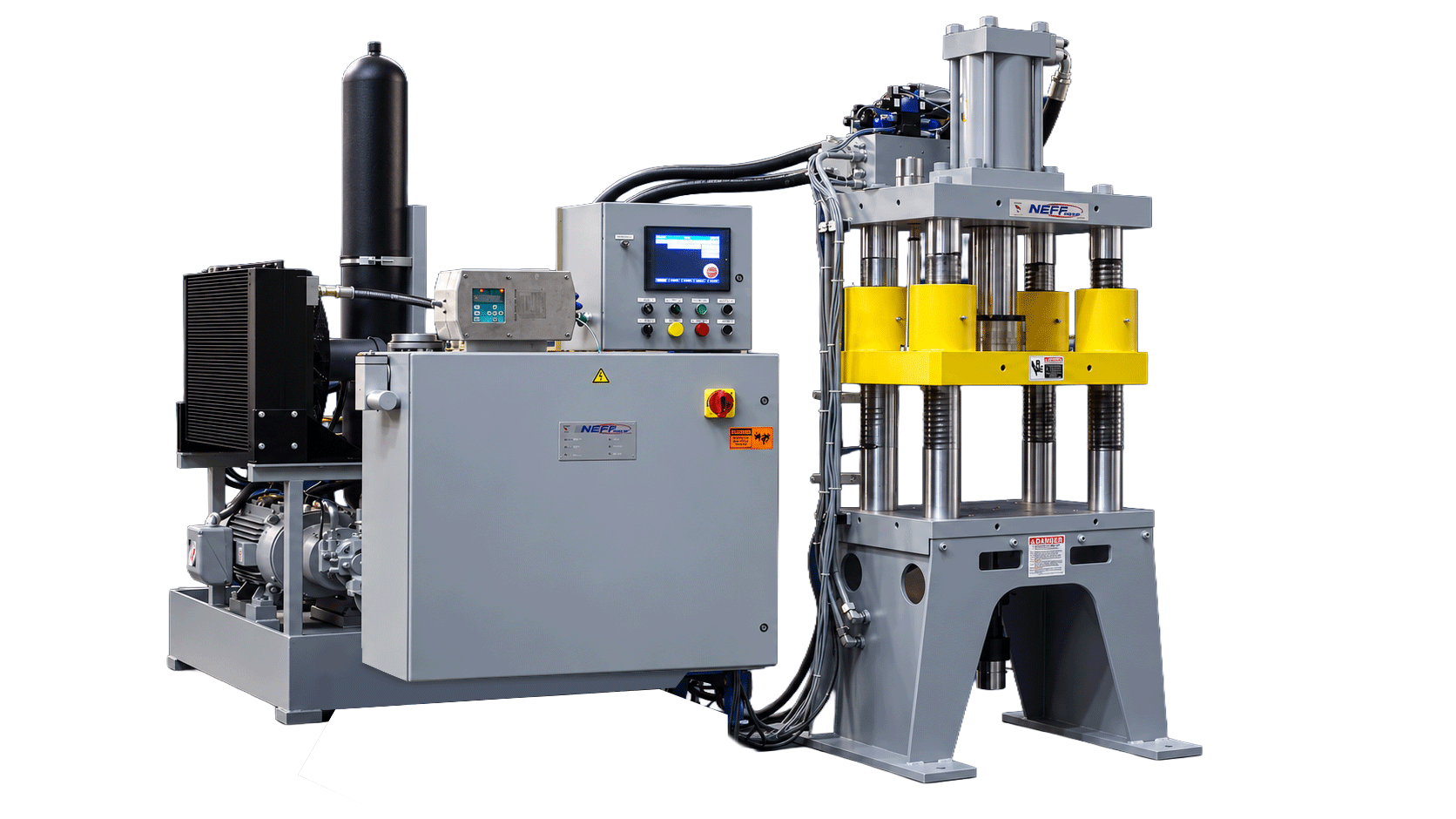
Whether you are manufacturing and processing bulk explosives, compacting munitions pellets or fabricating energetic devices, these presses offer easy access and can be equipped with data collection, index units, explosion-proof controls, dwell time and remote operation.
As defense and aerospace continue advancing press design, automation and new production methods, the press system has to support more than force alone.
Why it matters
Not a Standard Press With Rated Parts Added.
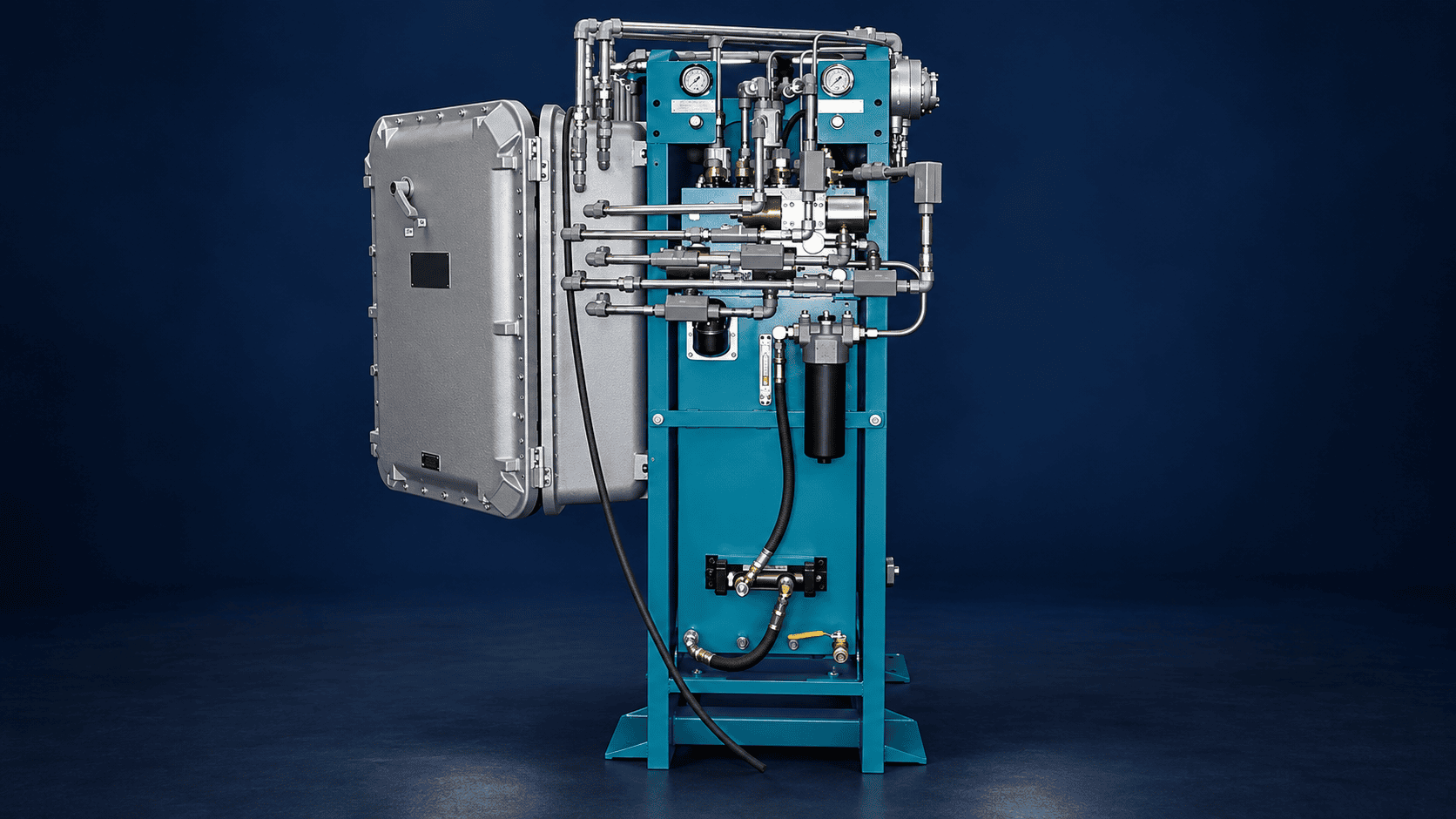
An explosion-proof press is a system. The hazardous-area classification can shape nearly every part of the machine, and each decision has to hold up on the plant floor and in the documentation package.
Neff engineers the full press around that requirement from the first drawing, instead of retrofitting a catalog machine after the fact.
What the classification can affect
- 01Controls and operator interface
- 02Motors and drives
- 03Sensors and instrumentation
- 04Wiring methods
- 05Enclosures
- 06Hydraulic power and components
- 07Process monitoring
- 08Shutdown functions
- 09System documentation
Capabilities
Neff Press incorporates explosion-proof components and controls into custom press systems for munitions, warheads, rockets, pyrotechnics, countermeasures, riot-control devices and air bag manufacturing. Our presses can compact materials such as metal powders, graphite, ceramics, boron nitride, carbide, PBX, titanium, molybdenum and Teflon.
-
Propellants
Press systems for forming, compacting and cutting propellant materials under defined production and hazardous-location requirements.
-
Ball Powder
Press and material-handling solutions designed around sensitive powder-processing environments and documented classification requirements.
-
Pelletized Energetics
Controlled press systems that hold repeatable force, position and process data when producing pelletized energetic components.
-
Shape Charge
Systems for forming and assembling shaped-charge components with controlled force, alignment and repeatability.
-
Metal Liner
Precision-guided hydraulic and electric servo presses for forming metal liners where alignment and dimensional control matter.
-
Primer
Application-specific press equipment for primer manufacturing and assembly, including guarding, controls and production monitoring.
-
Metal Powder
Press systems for metal-powder compaction and forming in applications with combustible-dust classification and dust-control needs.
-
Max Force
High-tonnage presses built with rigid-frame construction, controlled motion and specialized tooling for demanding energetic work.
-
Explosive Assembly
Integrated press systems built around your assembly process: material handling, controls, guarding and documented hazardous-area requirements.
How a project moves
From Classification to Acceptance.
-
Application Review
We review your part, process, force requirements and the documented hazardous-area classification.
-
Hazard-Analysis Support
Our engineers take part in hazard-analysis discussions with your safety and facility teams.
-
Engineering and Controls
Frame, hydraulics or servo drive, and UL 508A controls are designed together around the defined scope.
-
Build and Test
The press is built and tested in our U.S. facility before it ships.
-
Acceptance and Support
We support project acceptance, documentation handoff, startup and long-term service.
Presses We Have Built.
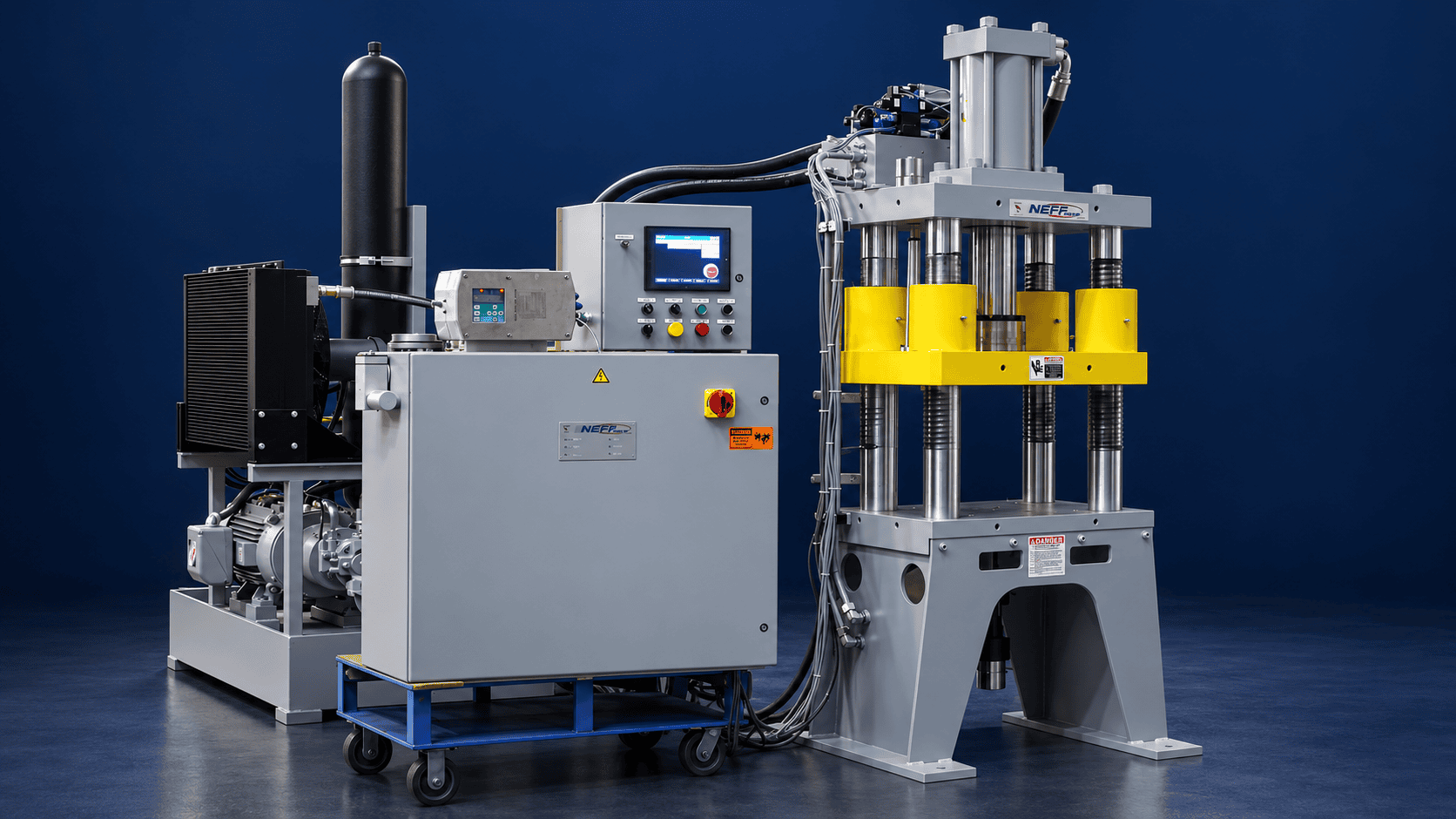
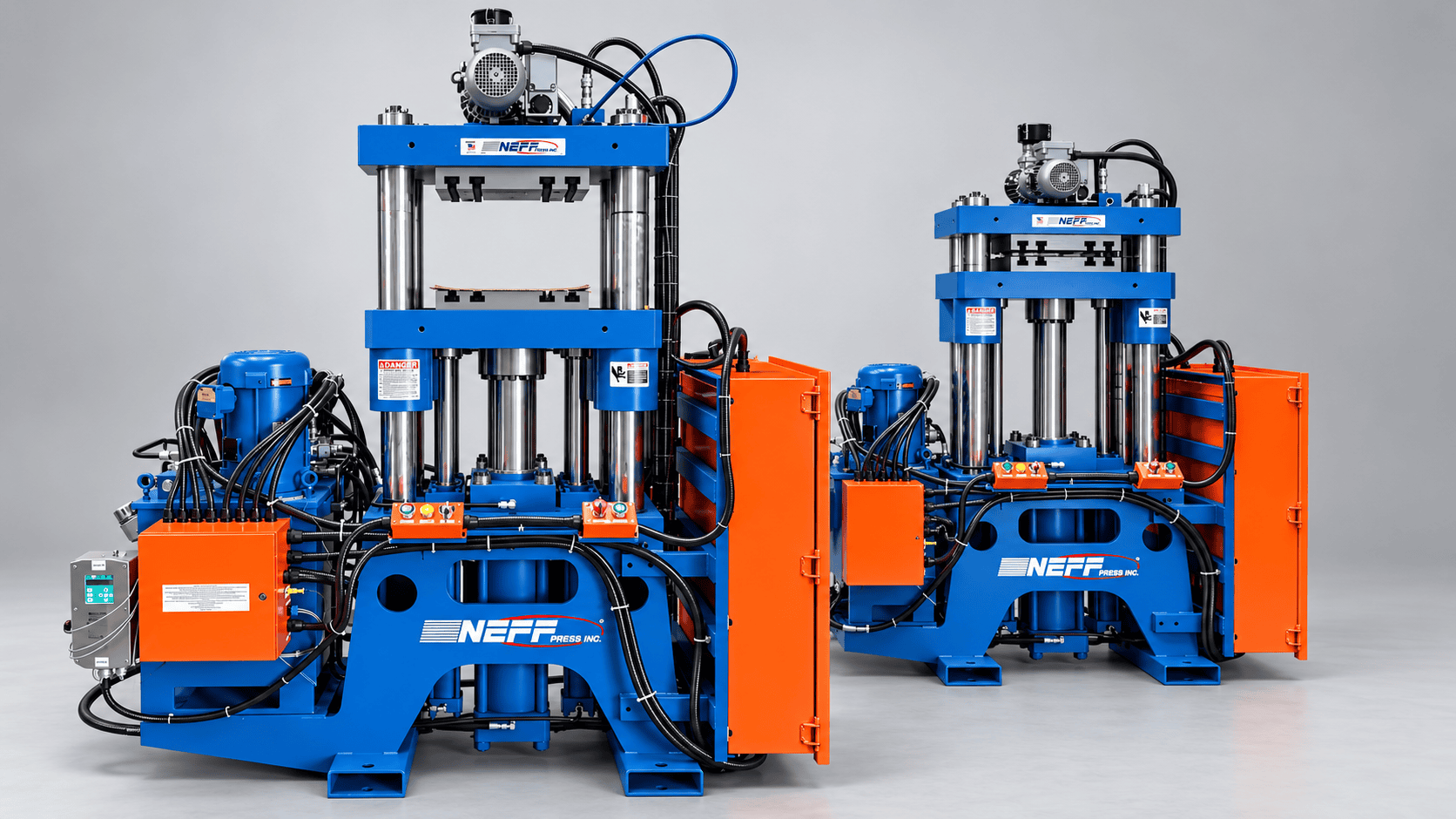
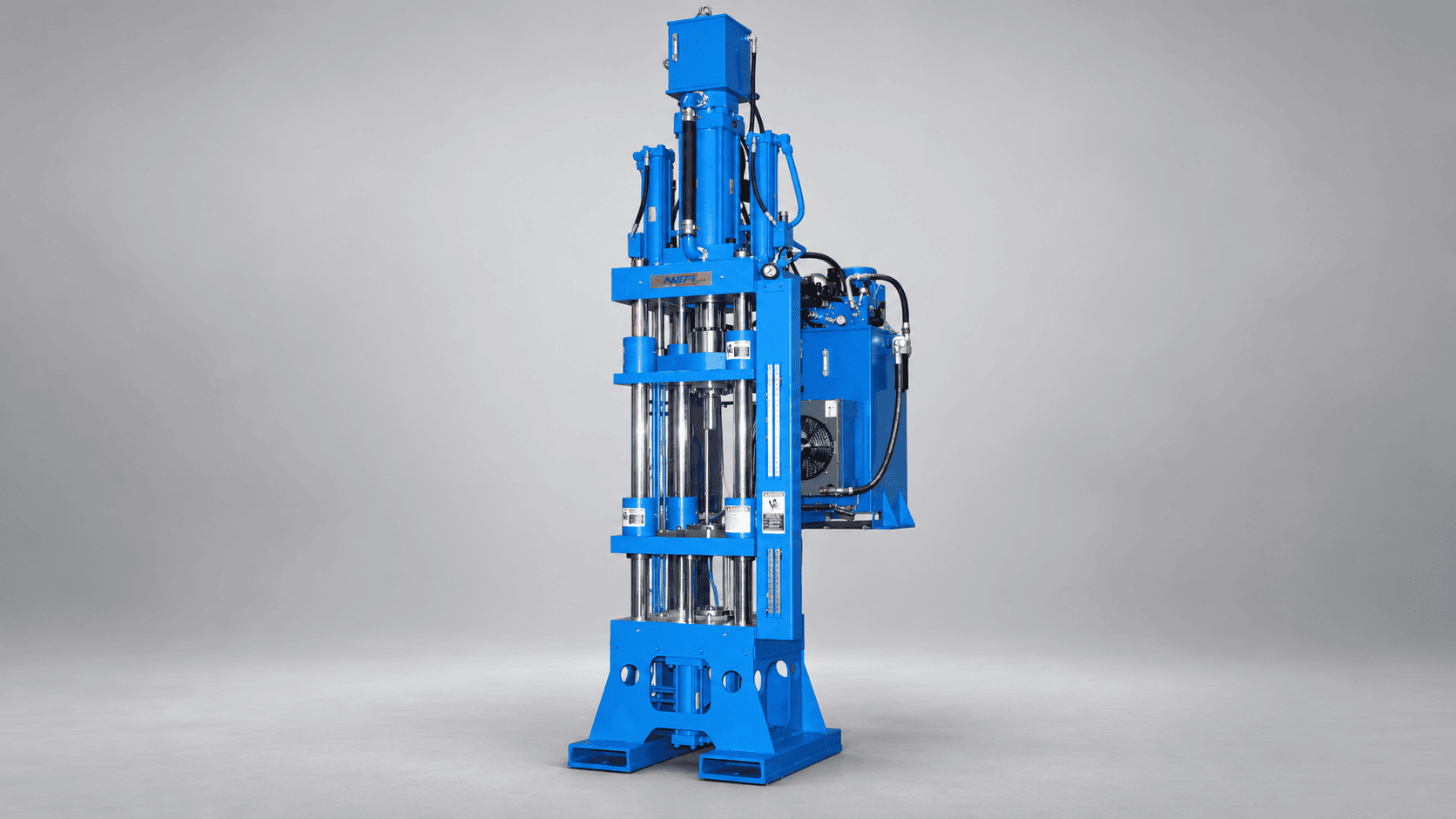
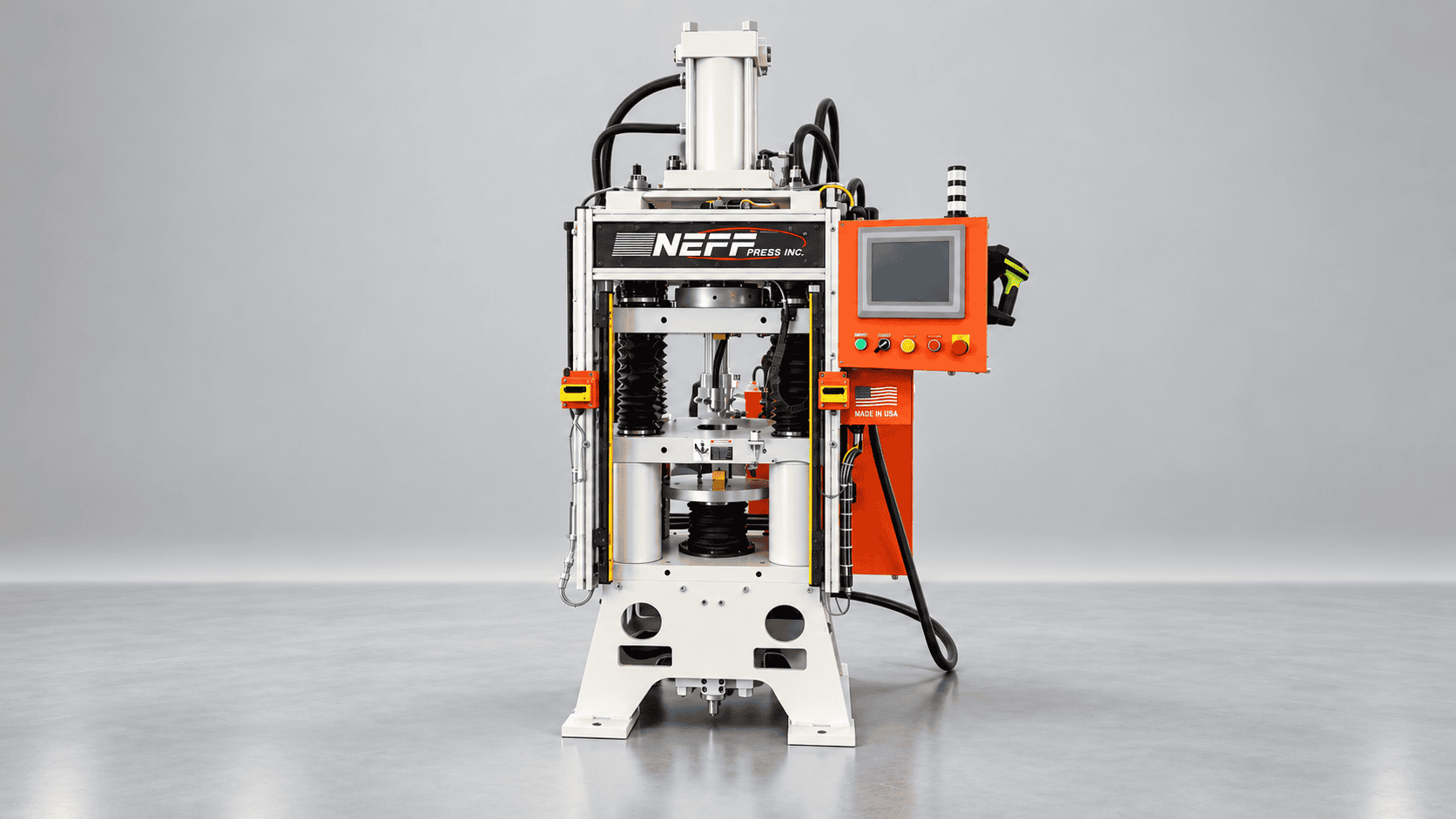
A sample of custom Neff press systems built for hazardous-location applications. Each one was engineered around a specific customer requirement.
Still researching?
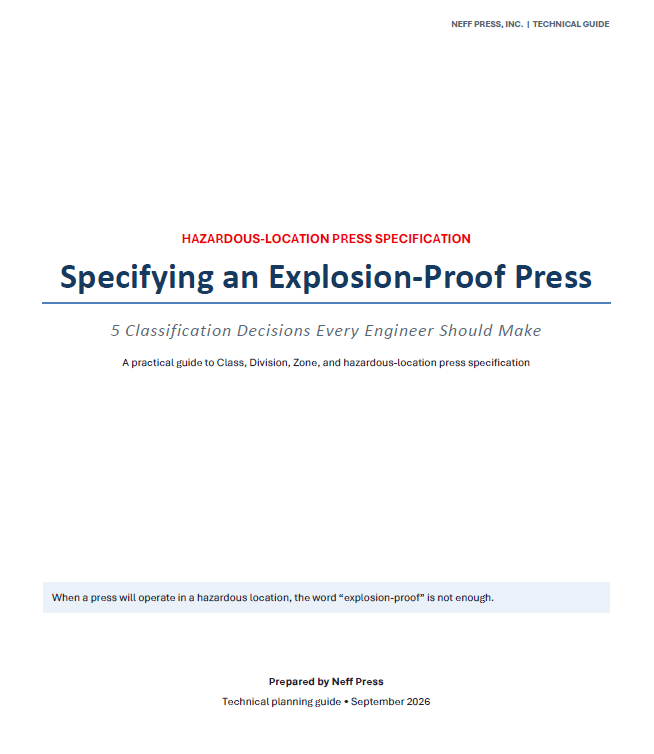
Explosion-Proof Press Specification White Paper
Not ready for a quote yet? The paper covers the questions to answer before you write a spec: what information to gather, how classification affects press scope and what to ask any press builder.
Download the White PaperCommon Questions.
Have a question that is not here? Call (314) 854-1200 and ask for engineering.
Who determines the hazardous-area classification?
The classification is typically established by the customer, the facility engineer or a qualified authority having jurisdiction. Neff uses that documented classification, along with your process requirements and hazardous boundary, to define the press equipment scope.
Are all Neff presses explosion-proof?
No. Explosion-proof and hazardous-location presses are engineered to order. The components, enclosures, wiring methods and documentation are selected for your specific classification and application.
Why not just add rated components to a standard press?
Classification requirements can affect controls, motors, sensors, wiring methods, enclosures, hydraulics, monitoring, shutdown functions and documentation. Treating those as add-ons often leads to gaps. Designing the full system from the start produces a cleaner, more supportable machine.
What information do you need to quote a press?
Start with the documented classification, where the press sits relative to the hazardous boundary, the material being processed, required force, stroke and cycle rate, and any facility or documentation standards. If some of that is still in progress, we can start with what you have.
Can you help with our hazard analysis?
Yes. Neff engineers can support hazard-analysis discussions with your safety, process and facility teams, and contribute press-level information as the analysis develops.
What controls platform do you use?
Neff uses open-architecture Allen-Bradley controls. As a UL 508A panel builder, we design and build control panels in-house.
Hydraulic or electric servo?
Both are options. The right choice depends on force, speed, precision, monitoring needs and how each drive fits within the classified area. We will recommend a direction during application review.