Home › Hydraulic Presses › Floor Models
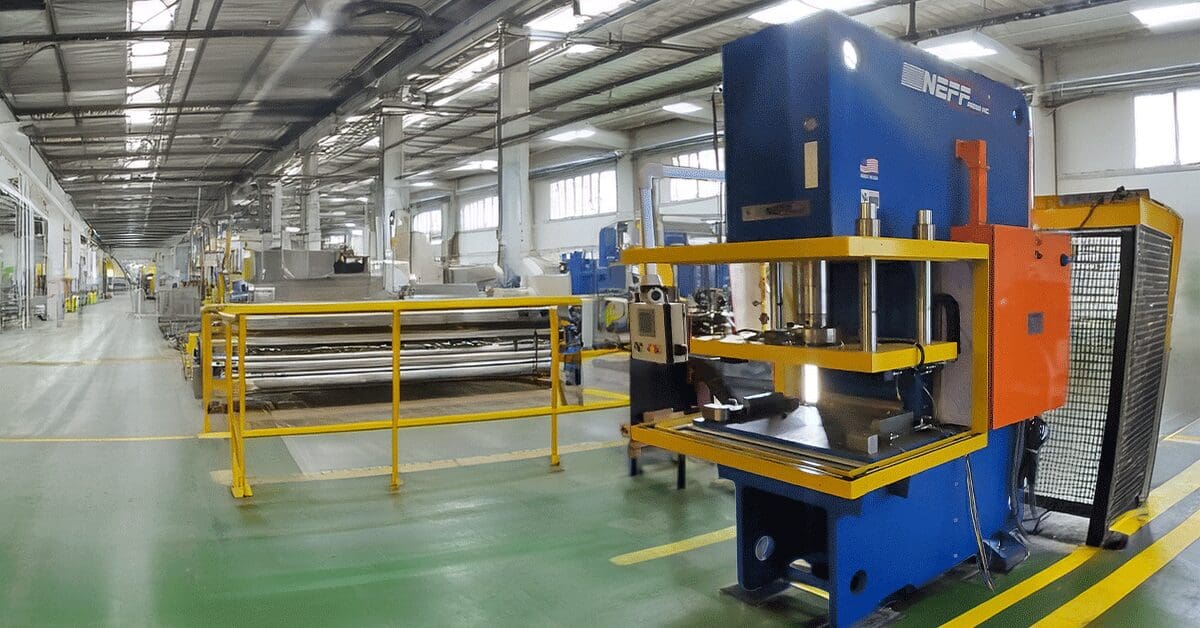
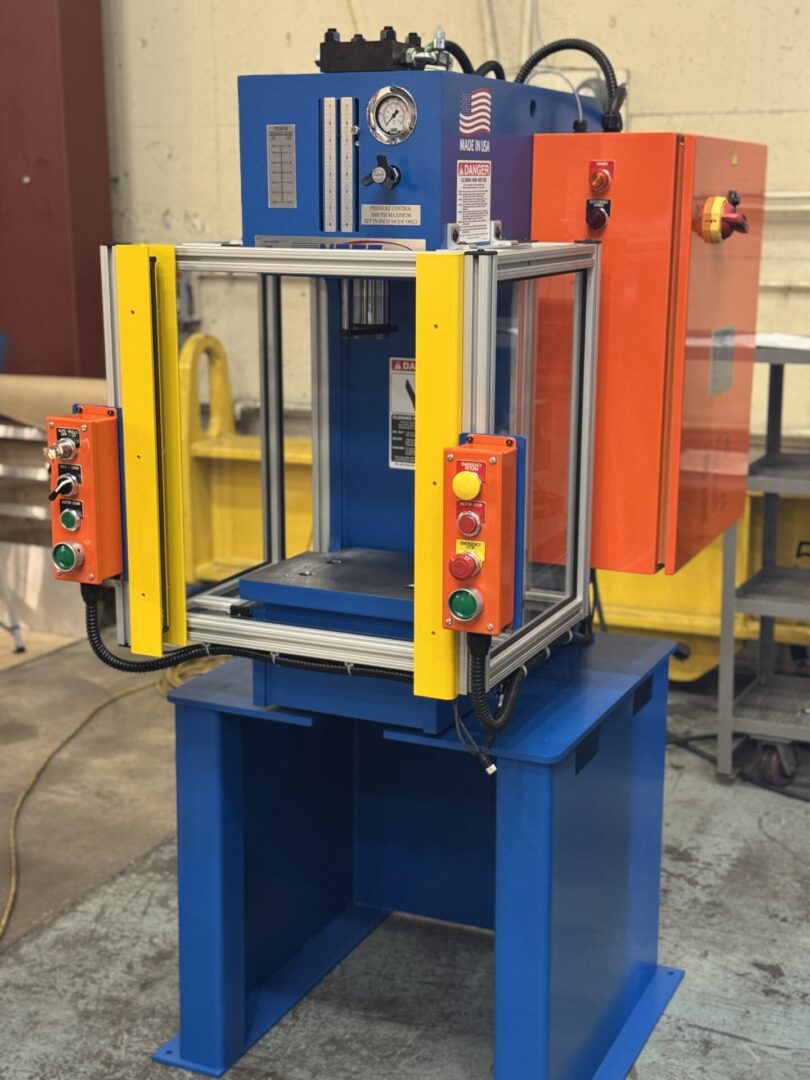
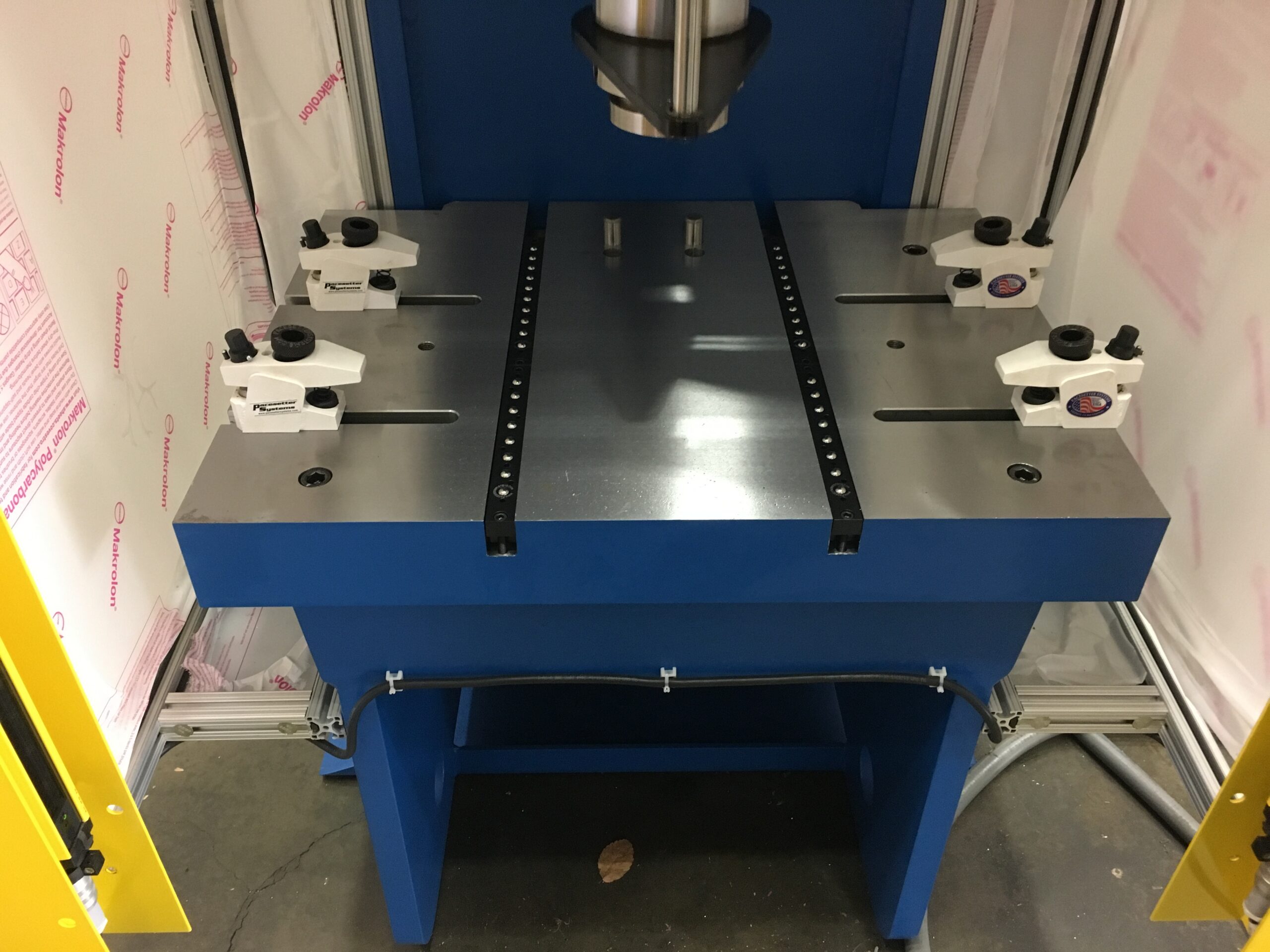
Neff Press hydraulic floor models deliver 2–250 tons of force with three-sided tooling access from a low-deflection C-frame. Configure the press around your assembly, forming, stamping, or other medium-to-heavy production requirements.
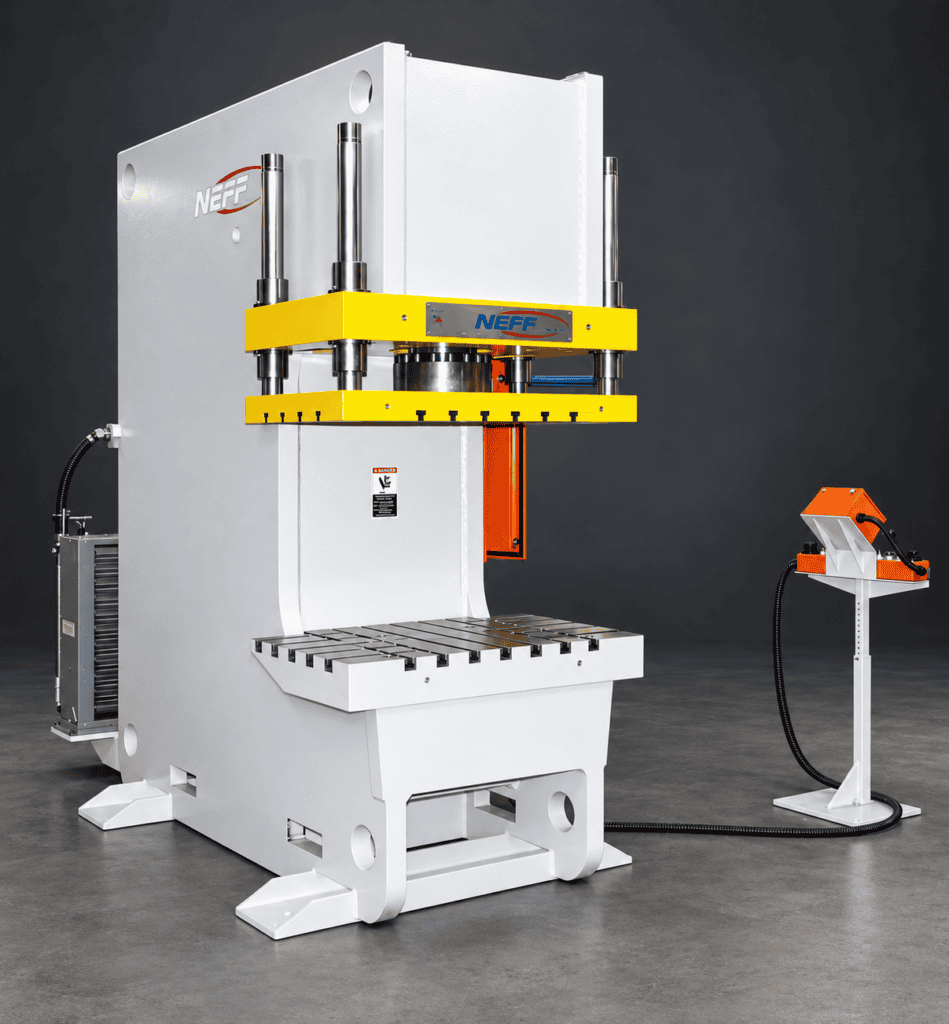
These specifications describe our standard floor models. Custom dimensions and configurations are available to suit your tooling, process, and production requirements.
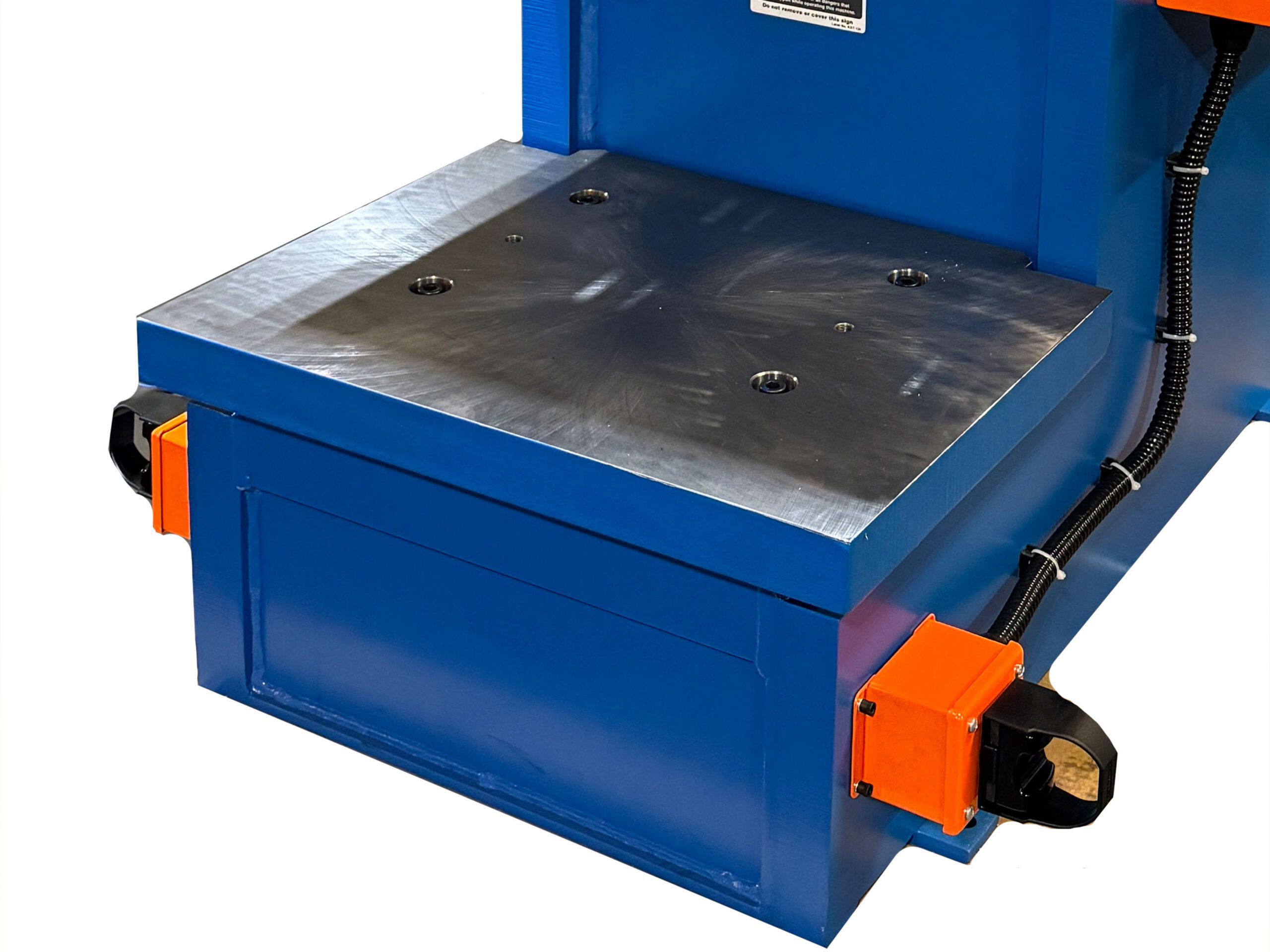
Standard DF-Series floor models have a 24 in. daylight opening, a 10 in. throat, an adjustable 0.5–10 in. stroke, and 150–3,000 psi operating pressure. The DF200-50M steps up to 30 in. of daylight, a 16 in. throat, and a 0.5–16 in. stroke. Rated force, bolster size, and motor size scale with the model.
| Model | Rated Force (tons) | Stroke | Daylight | Throat | Bed / Bolster (W × D × T) | Specification Sheet |
|---|---|---|---|---|---|---|
| DF15-5HS | 3–18.8 | 0.5–10 (adjustable) | 24 | 10 | 24 × 21 × 3 | |
| DF15-15M | 3–18.8 | 0.5–10 (adjustable) | 24 | 10 | 24 × 21 × 3 | |
| DF25-15M | 5–29.5 | 0.5–10 (adjustable) | 24 | 10 | 24 × 21 × 3 | |
| DF40-15M | 7–42.4 | 0.5–10 (adjustable) | 24 | 10 | 24 × 21 × 3 | |
| DF50-15M | 9.5–57.7 | 0.5–10 (adjustable) | 24 | 10 | 30 × 21.5 × 4 | |
| DF75-15M | 12.5–75.4 | 0.5–10 (adjustable) | 24 | 10 | 30 × 21.5 × 4 | |
| DF100-30M | 19.5–117 | 0.5–10 (adjustable) | 24 | 10 | 33 × 21.5 × 4 | |
| DF150-30M | 28–169 | 0.5–10 (adjustable) | 24 | 10 | 33 × 21.5 × 4 | |
| DF200-50M | 38.5–230.9 | 0.5–16 (adjustable) | 30 | 16 | 48 × 31 × 6 |
Daylight is the open height between the ram face and the bolster when the ram is fully retracted. It limits the combined height of your tooling and part.
Stroke is how far the ram travels, which sets how much of that opening the ram can work through.
Standard model dimensions, ram speeds, pump flow, bolster layouts, and available custom options. PDF, 2 pages.
Repeatable cycles and straightforward operator control.
Built for the plant floor and simple installation.
Designed and built in house for long service life.
Match the control package to how the press runs in your cell.
Shorten changeovers and move parts through the press consistently.
Adapt the press to your facility and operating conditions.
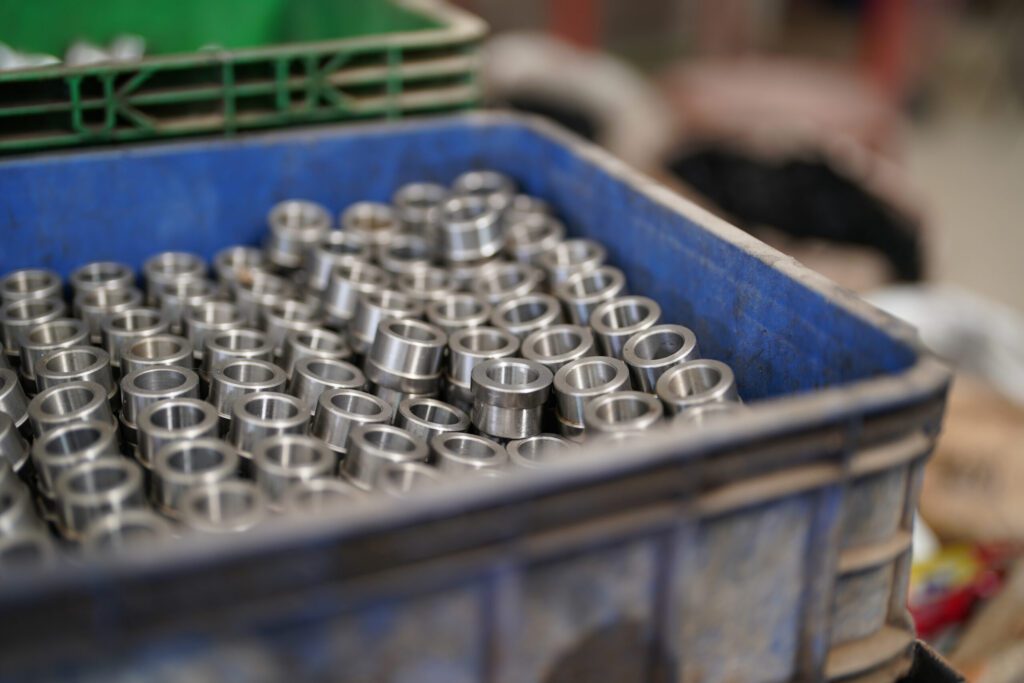
Interference fits, staking, crimping, inserting, and coining on parts and tooling that need more force or a larger frame than a bench model provides.
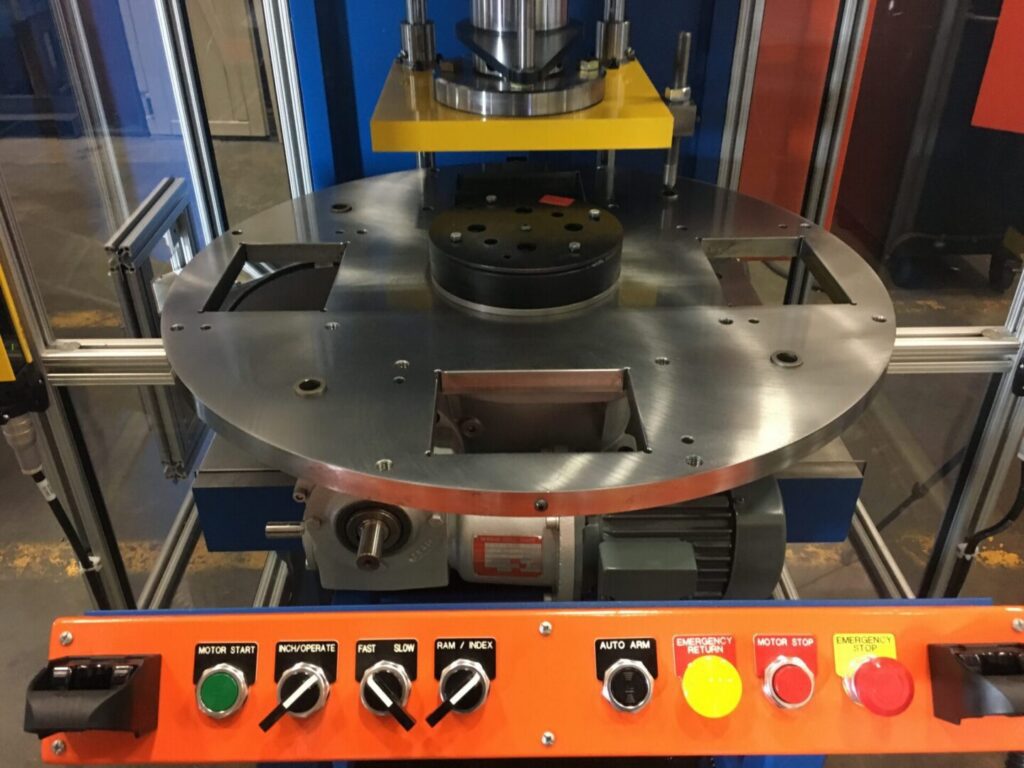
An index unit moves parts through repeatable steps such as small bending, keyway broaching, punching, and shearing, with three sides of the bed free for the indexer.
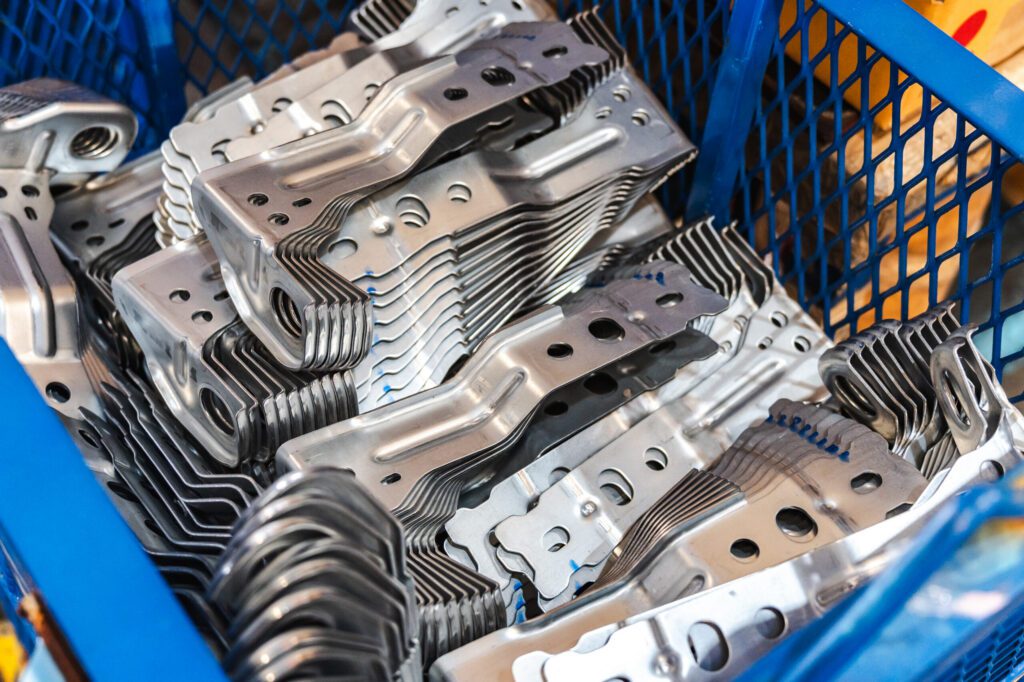
Hot stamping, close-tolerance dies, feed integration, and repeatable forming for demanding production work.
It depends on the operation (a press fit, staking, forming, or punching), the material, and the part geometry. Engineers usually start from a calculated or measured force and add margin. Send your part drawing, material, and operation, and our team can help confirm the tonnage and model.
Daylight is the open height between the ram face and the bolster with the ram fully retracted. It limits the combined height of tooling and part. Stroke is how far the ram travels. Standard DF-Series floor models have 24 in. of daylight and a stroke adjustable from 0.5 to 10 in. The DF200-50M has 30 in. of daylight and a stroke adjustable from 0.5 to 16 in.
Yes. The C-frame leaves three sides of the bolster open for indexers, slides, and feed integration packages, and the press can be configured with automatic cycles and custom PLC controls to work with other equipment in the cell.
The main factors are the force you need, the daylight and bolster size your tooling requires, the size and weight of your parts, and how the press fits into your cell. A floor model offers more force, larger tooling capacity, and a stronger frame than a hydraulic bench model.
Share what you know: the part and material, the operation, the expected force, tooling dimensions, production rate, how parts are loaded and unloaded, control requirements, and any facility or environmental conditions. Our team can help work through the rest.