Home › Hydraulic Presses › Precision Guided Models
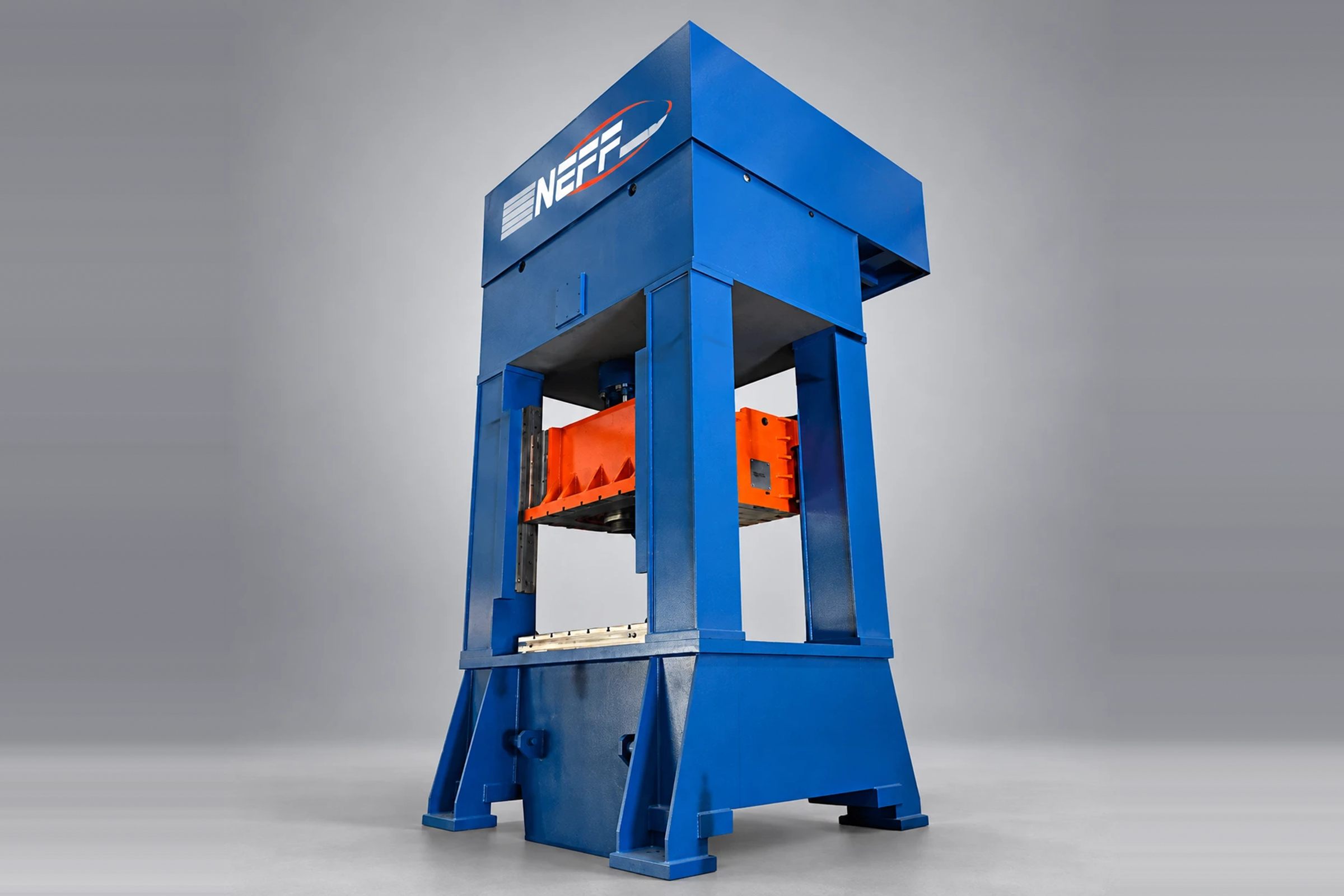
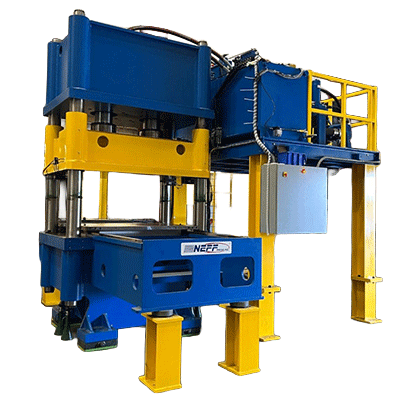
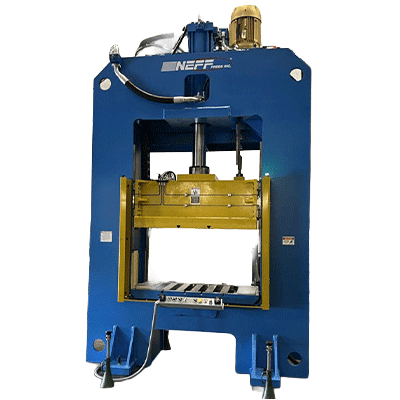
Neff Press precision guided models deliver 2–10,000 tons of force with rail-guided or 8-point gib-guided designs. They’re built for off-center loads, close-tolerance dies, progressive dies, and other demanding work where repeatable alignment is critical.
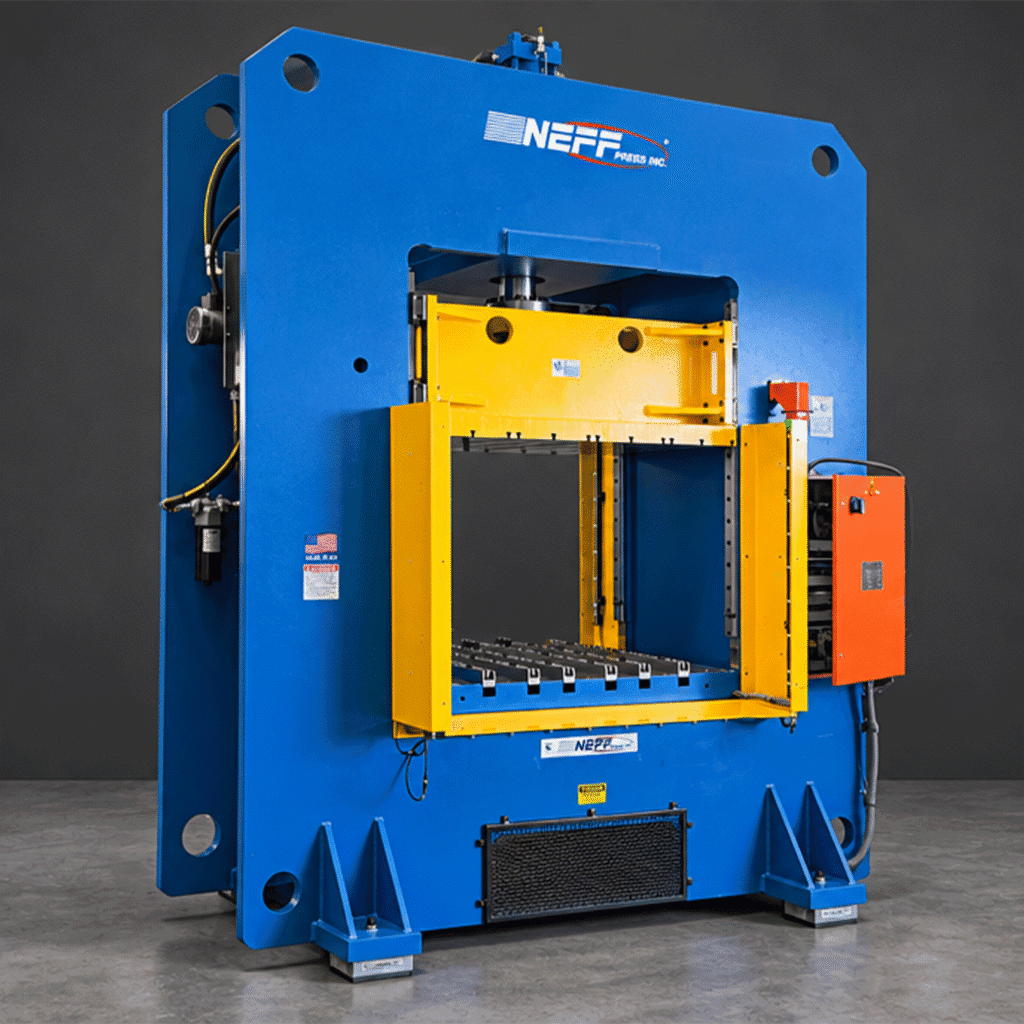
Neff Press designs and manufactures rail-guided presses from 2–2,500 tons and 8-point gib-guided presses from 2–10,000 tons, with dimensions built around your application rather than a fixed list of standard models.
Use the specifications below to outline what your press needs to do. Our team can help work through the rest.
| Specification | What It Defines |
|---|---|
| Guide system | Rail-guided or 8-point gib-guided. |
| Rated force | Rail-guided from 2–2,500 tons. Gib-guided from 2–10,000 tons. |
| Daylight / open height | The open height between the ram face and the bolster with the ram fully retracted. |
| Stroke | How far the ram travels. |
| Work height | The height of the work surface above the floor. |
| Distance, left to right | The side-to-side working width. |
| Distance, front to back | The front-to-back working depth. |
| Overall footprint | Driven by various factors. Consult the factory for dimensions. |
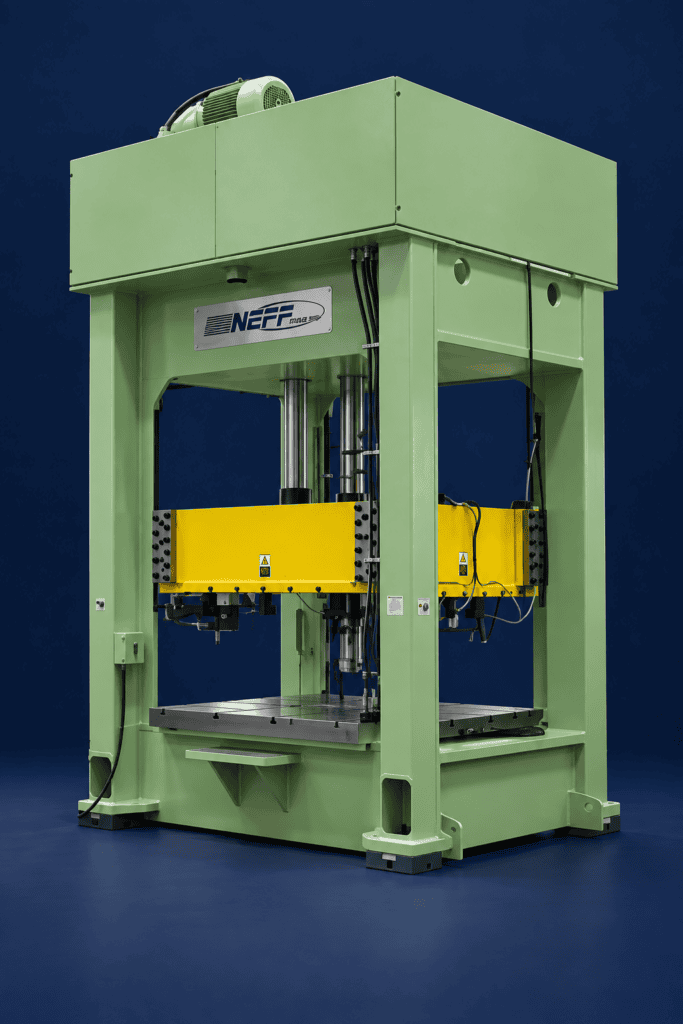
Daylight is the open height between the ram face and the bolster when the ram is fully retracted. It limits the combined height of your tooling and part.
Stroke is how far the ram travels, which sets how much of that opening the ram can work through.
Features, specification drawings, and common custom options. PDF, 2 pages each.
Repeatable cycles and straightforward operator control.
Built for the plant floor and simple installation.
Designed and built in house for long service life.
Match the control package to how the press runs in your cell.
Shorten changeovers and move parts through the press consistently.
Adapt the press to your facility and operating conditions.
Reduce wrinkling, tearing, and inconsistent finished parts when material flow is difficult to control.
Remove excess material from cast, forged, molded, and formed parts with controlled force and repeatable geometry.
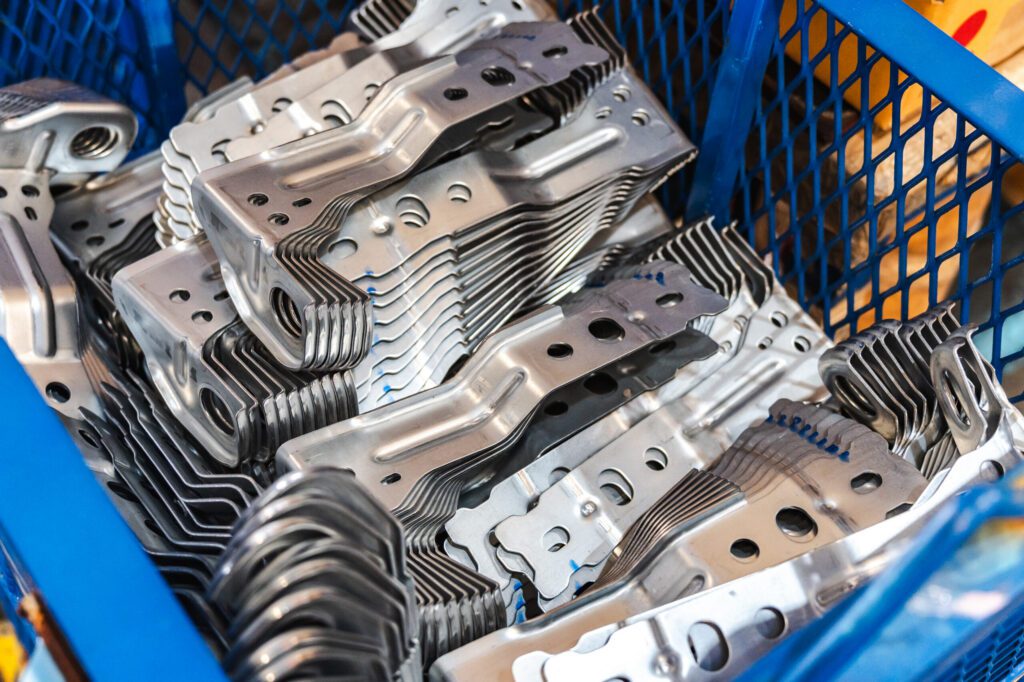
Hot stamping, close-tolerance dies, and feed integration for repeatable formed parts with stronger process control.
It depends on the operation (a press fit, staking, forming, or punching), the material, and the part geometry. Engineers usually start from a calculated or measured force and add margin. Send your part drawing, material, and operation, and our team can help confirm the tonnage and model.
Precision guides help protect tooling by keeping the ram moving on a controlled vertical path. When force is applied unevenly, rails and gibs reduce side movement, tilt, and deflection. This helps keep the upper and lower die aligned, even during off-center loading. As a result, manufacturers can reduce tooling damage and produce more consistent parts.
Daylight is the open height between the ram face and the bolster with the ram fully retracted. It limits the combined height of tooling and part. Stroke is how far the ram travels. On a precision guided press, both are set around your application, so share your tooling and part dimensions and our team can help confirm them.
Yes. These presses can be configured with index units, shuttle systems, and feed integration, along with automatic cycles and CNC controls to work with other equipment in the cell.
The main factors are the force you need, how the load sits on the die, and your frame and tooling requirements. Rail-guided presses are offered from 2–2,500 tons, and 8-point gib-guided presses from 2–10,000 tons. Share your application and our team can help you compare them.
Share what you know: the part and material, the operation, the expected force, tooling dimensions, production rate, how parts are loaded and unloaded, control requirements, and any facility or environmental conditions. Our team can help work through the rest.