A press can have enough tonnage to form a part and still be the wrong press for the job. If your tooling is wearing on one side, completed part dimensions are drifting, or force is being applied off center, the frame structure and how the slide is guided should be reviewed.
The same questions apply before you build a new process. You do not have to wait for damaged tooling or a scrap problem to recognize that an application needs better guidance.
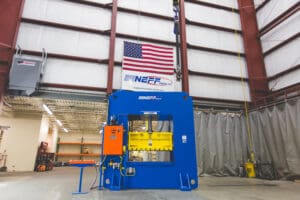
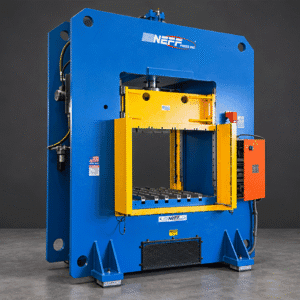
At Neff, we start with the part geometry and how the press and tooling will apply force and interact. Deep drawing, blanking, forming, coining, and progressive die work each place different demands on the moving platen. Our precision-guided hydraulic or gib guided models are designed specifically for off-center loads, close-tolerance dies, progressive dies, and applications where ram alignment matters throughout the stroke.
Precision guidance describes how a press guides the moving platen as the tooling approaches and contacts the part. It is not a blanket promise of a specific dimensional tolerance.
Two things work together here: the guiding system controls the platen’s path and orientation, and the frame and platen structure support the forces generated during the operation. A capable guiding system cannot make up for a frame that flexes underload, and a heavy frame does not eliminate the need for appropriate guidance.
It is also worth separating guidance from distance or speed control. A press can repeat a programmed position accurately and still not handle an uneven load the way the application requires. That is why we look beyond the word “accuracy” on a spec sheet. We want to understand critical dimensions and how alignment, where force is applied, and how the tooling interacts with the part throughout the stroke. Compound dies and ones that have multiple actions, like a blank and draw die have different variables to consider at different positions in the stroke.
“When a press goes down, the first question is never about the original purchase price,” said Jon Schmidt, Vice President at Neff Press. “It is about how quickly you can get the right person on the phone and the right part in the building. That is where the location of your press builder matters.”
Off-center loading is one of the clearest reasons to consider a precision guided press before selecting a machine.
A part does not have to look dramatically asymmetric to create an uneven load. Tool design and the sequence of operations determine where force acts. Progressive die work is a good example: different stations perform different operations, so the loads and tonnage points can change in each station.
When the application depends on the upper and lower tooling holding a consistent relationship throughout the stroke, parallelism becomes an engineering requirement, not a secondary spec.
The key distinction is between alignment at setup and behavior under load. An unloaded measurement is useful, but the press needs to hold that relationship when force is being applied. If parallelism is hard to maintain, the review should look at the guiding system, frame stoutness, platen contact at corners, tooling layout, and tonnage location together.
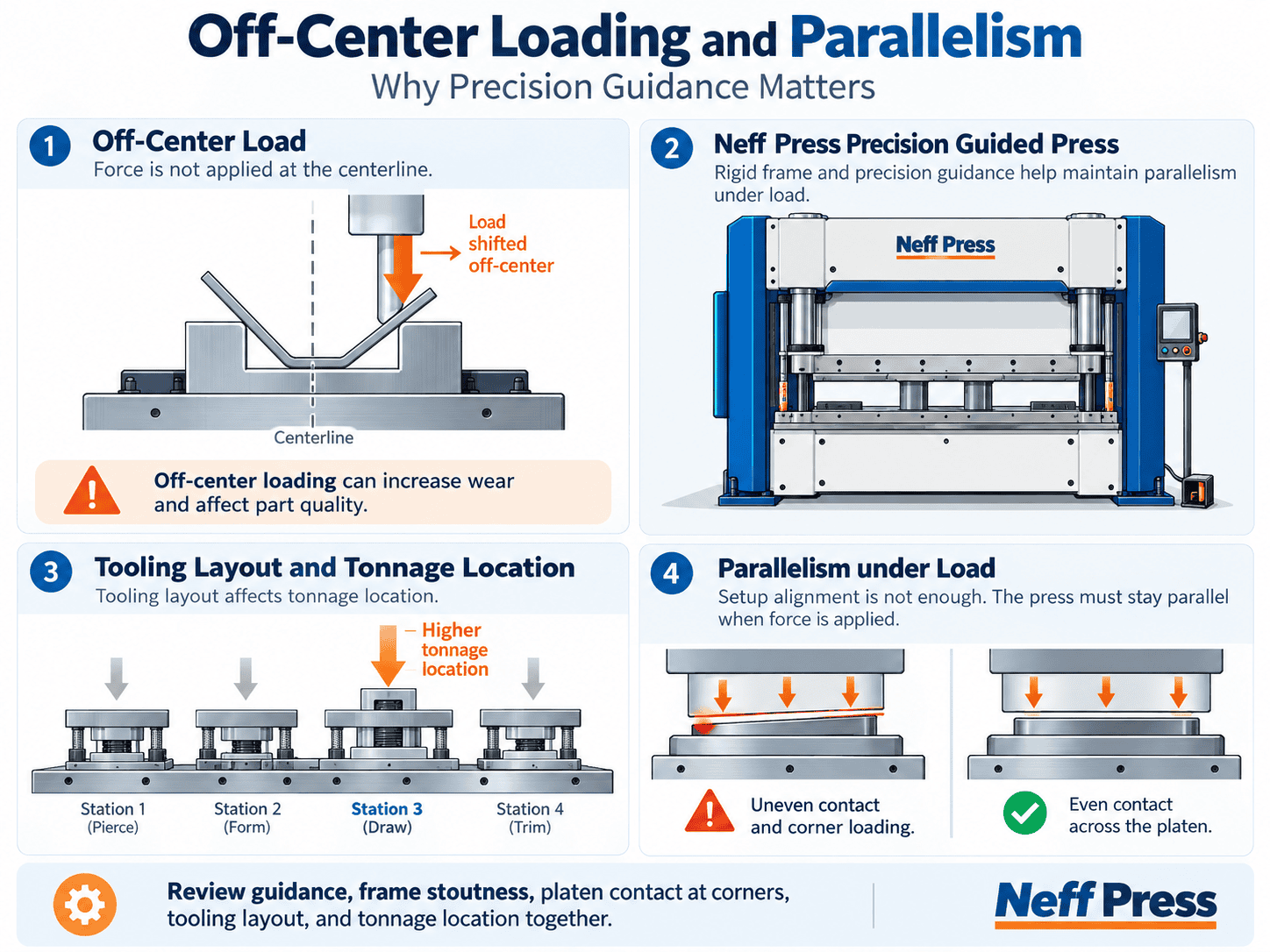
One-sided wear is a reason to look at the relationship between the tooling and the press, not just replace the worn component.
If the same side of a tool repeatedly needs attention, or wear returns after the tooling has been repaired or replaced, that pattern is telling you something. Tooling condition, material variation, and setup all factor in, but the pattern is a useful starting point for asking whether the moving platen is supporting the tool the way the application requires.
If the same tool keeps coming back to maintenance for the same issue, the press deserves a look before the next repair order gets written.
Our goal is not to blame the press or the die. It is to understand how they work together, because replacing tooling without examining that relationship often leaves the real problem in place.
A forming operation might produce good parts during setup, then struggle to hold consistency in production. Or the process shows variation across the part that material and tooling adjustments cannot fully explain. The useful question is whether the tooling maintains the required relationship as force builds. For automotive, appliance, aerospace, defense, and general metal-forming work, that relationship is often central to part quality.
Are you trying to solve a control problem, or are you asking the press to hold alignment under a load it was never built to handle?
If your team has reviewed the tooling and process but continues to adjust for inconsistent results, that pattern is worth paying attention to. Continual adjustment should not become the standard way to manage an application.
A new review offers a chance to get ahead of this. Part geometry, tooling concepts, and tonnage/position locations can identify guidance requirements before a production history has to show you the problem.
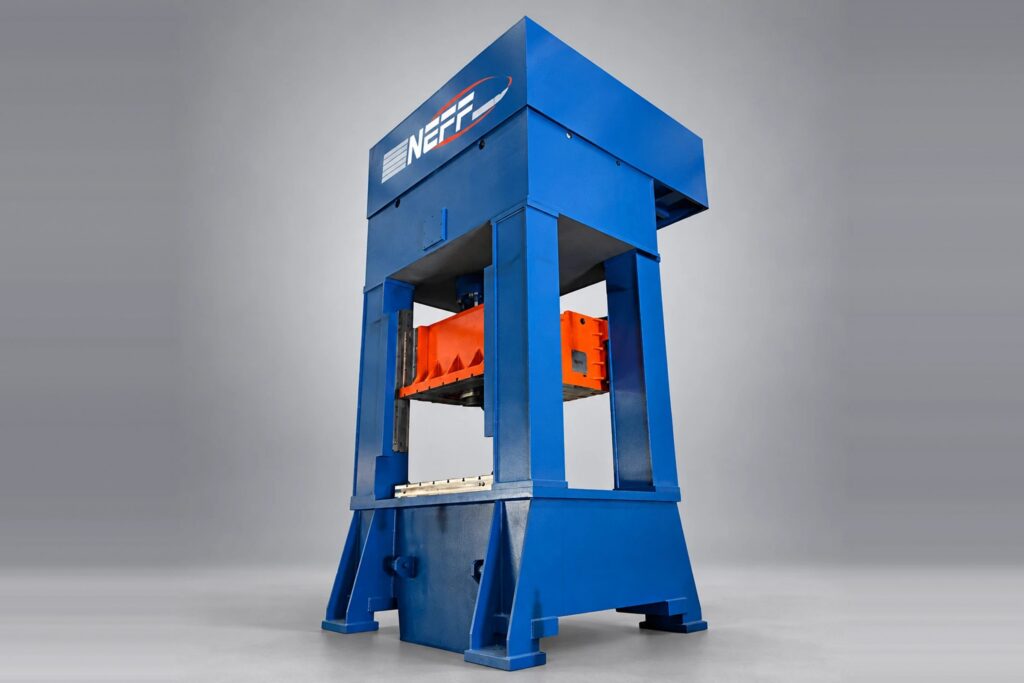
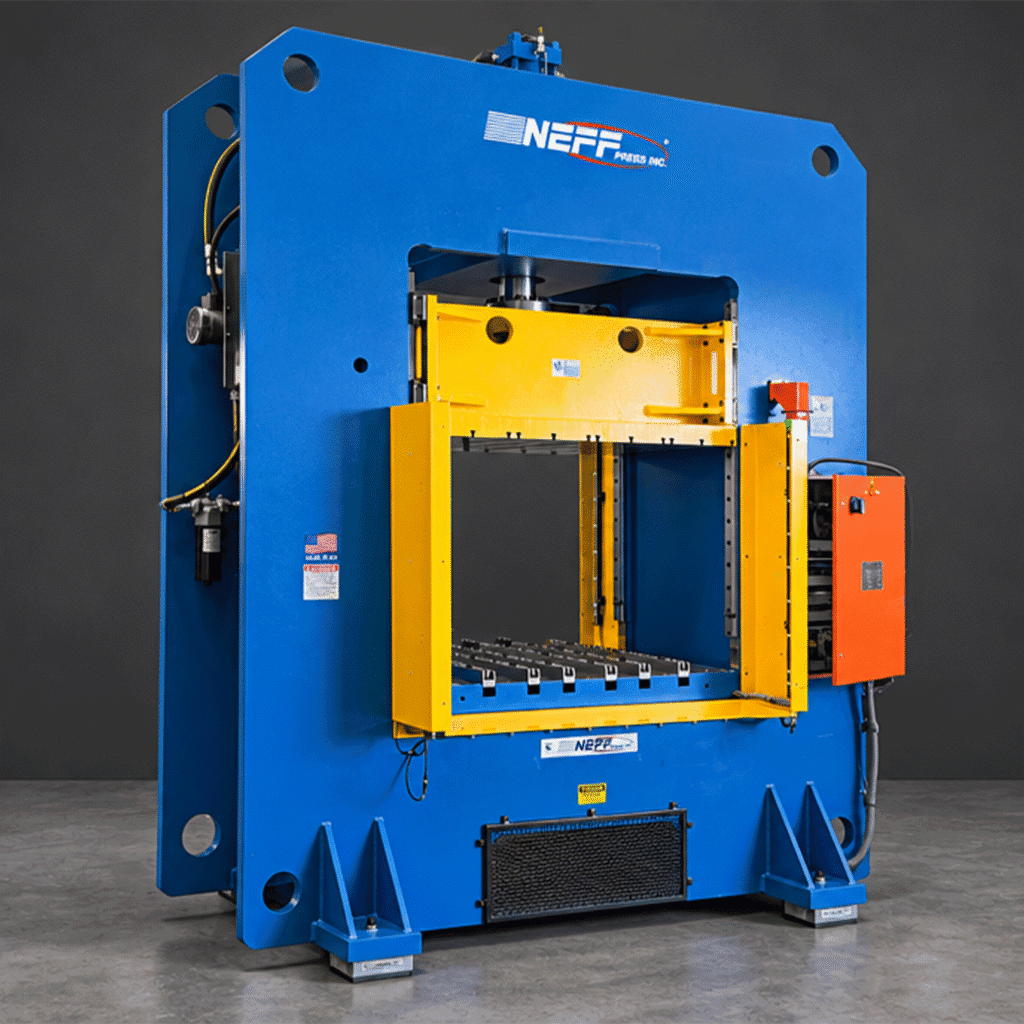
Neff Press offers both gib-guided (4,6 and 8 point) and rail-guided configurations. The detailed comparison between the two deserves its own article, but both should be selected around the application, not the name. Relevant considerations include press workload, part geometry, tooling dimensions, load location, available bed space, and the relationship the tooling must maintain during contact.
Power source and guidance are also separate choices. Neff builds precision-guided hydraulic models and rail-guided electric servo models. The decision between hydraulic and electric actuation does not remove the need to evaluate the frame and guidance for the application.
The most useful starting point for evaluating a precision guided press is the part itself and the process that will produce it.
For an existing operation, that means what is happening today:
For a new operation, it means the planned forming sequence and tooling concept. A practical starting point includes the part drawing or model, the current or proposed production sequence, tooling dimensions and die-set details if available, required force and where it acts, any existing wear or scrap observations, alignment or deflection requirements, and bed-space, feeding and orientation, part retrieval, tool and die access, and guarding needs.
You do not need everything finalized before the conversation starts. If the tool design is still being developed, we can work with what you have and help figure out what else is needed to select the correct press.