When people hear the term “explosion-proof press,” the instinct is understandable: choose the highest level of protection available.
For manufacturing teams compacting energetic powders, ball powders, metal powders, or other combustible materials, the consequences of getting a press specification wrong can be severe and costly. That is why many requests for quotes arrive with a simple instruction: “Provide a Class I explosion-proof press.”
However, Class I is not automatically the safest choice for every powder compaction application.
Class I equipment is intended for environments involving flammable gases, vapors, or liquids. Class II equipment is intended for environments where combustible dust is the concern. When the process involves powder, specifying Class I by default can add cost, complicate maintenance, and still fail to address a critical dust-related risk.
The safest explosion-proof press specification is not the most extreme one. It is the one that matches the actual hazard.
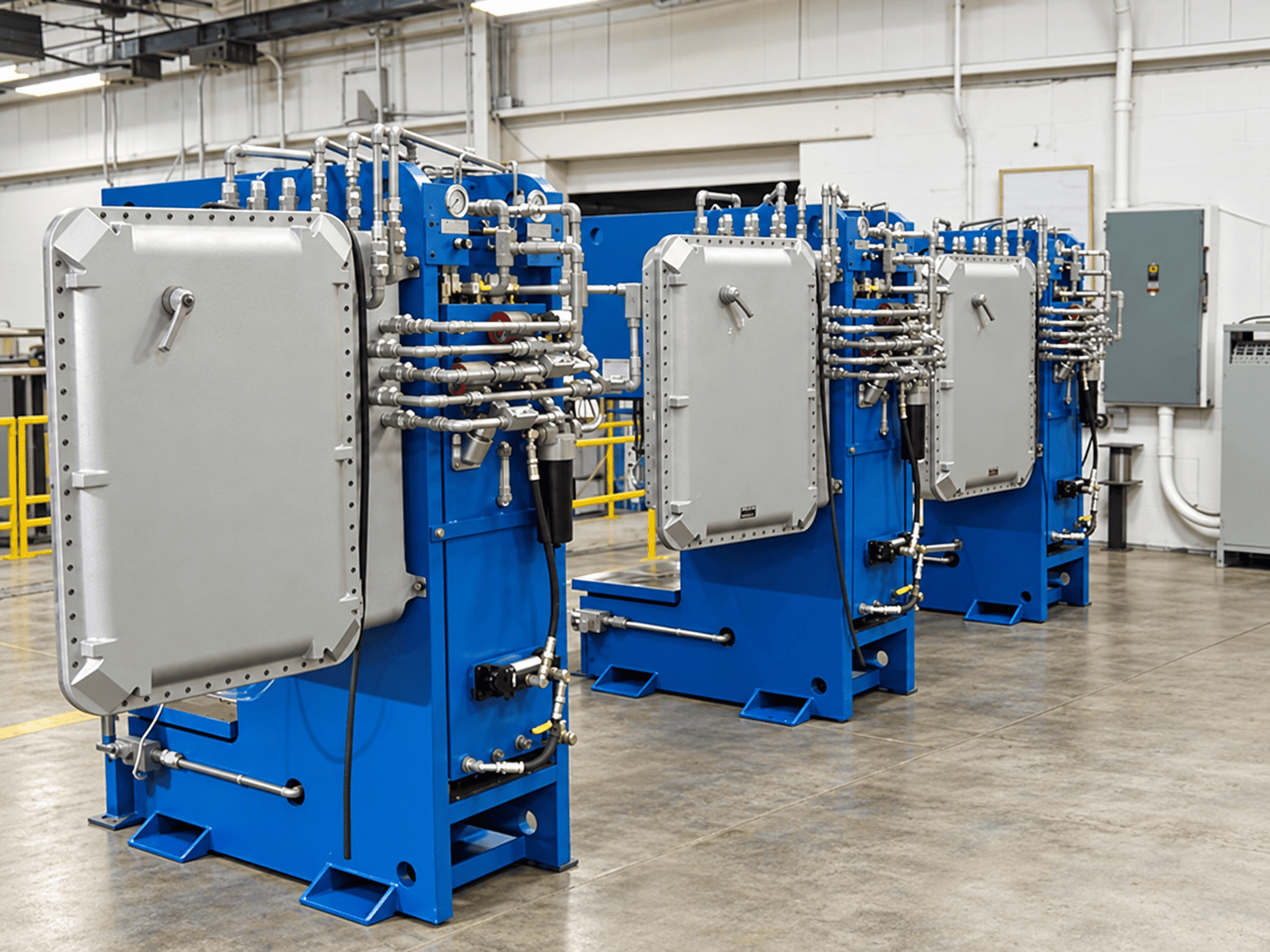
We see this often in explosion-proof press RFQs, particularly for powder compaction applications related to munitions, ball powder, energetic materials, and certain metal powders.
In many cases, the customer has a legitimate reason for being conservative. Internal safety policies, insurer expectations, and the responsibility of protecting employees can lead teams to request what they believe is the safest possible capital equipment. Sometimes, the requirement also reflects a future facility plan that is not visible to the press builder. A company may intend to move the press into a more hazardous location later, or it may be working with a proprietary process it cannot fully disclose during early discussions.
Those are fair considerations. Still, an RFQ should start with the hazard that has been identified, not the label that sounds the most protective.
A powder compaction press is not automatically a Class I application. If the concern is combustible powder or dust, the relevant conversation is generally Class II. Class I controls and components may come with more visible “bells and whistles,” but added complexity is not the same thing as added protection when the equipment is designed around the wrong hazard.
That distinction is important for plant engineers, operations leaders, and maintenance teams. A press can be expensive, heavily built, and full of specially rated components, yet still be mismatched to the environment where it will run.
When a Class I requirement is applied to a process that actually calls for Class II equipment, the cost difference can be meaningful.
In our experience, a Class I approach can add approximately 20% to the cost of a press. The increase can come from several areas:
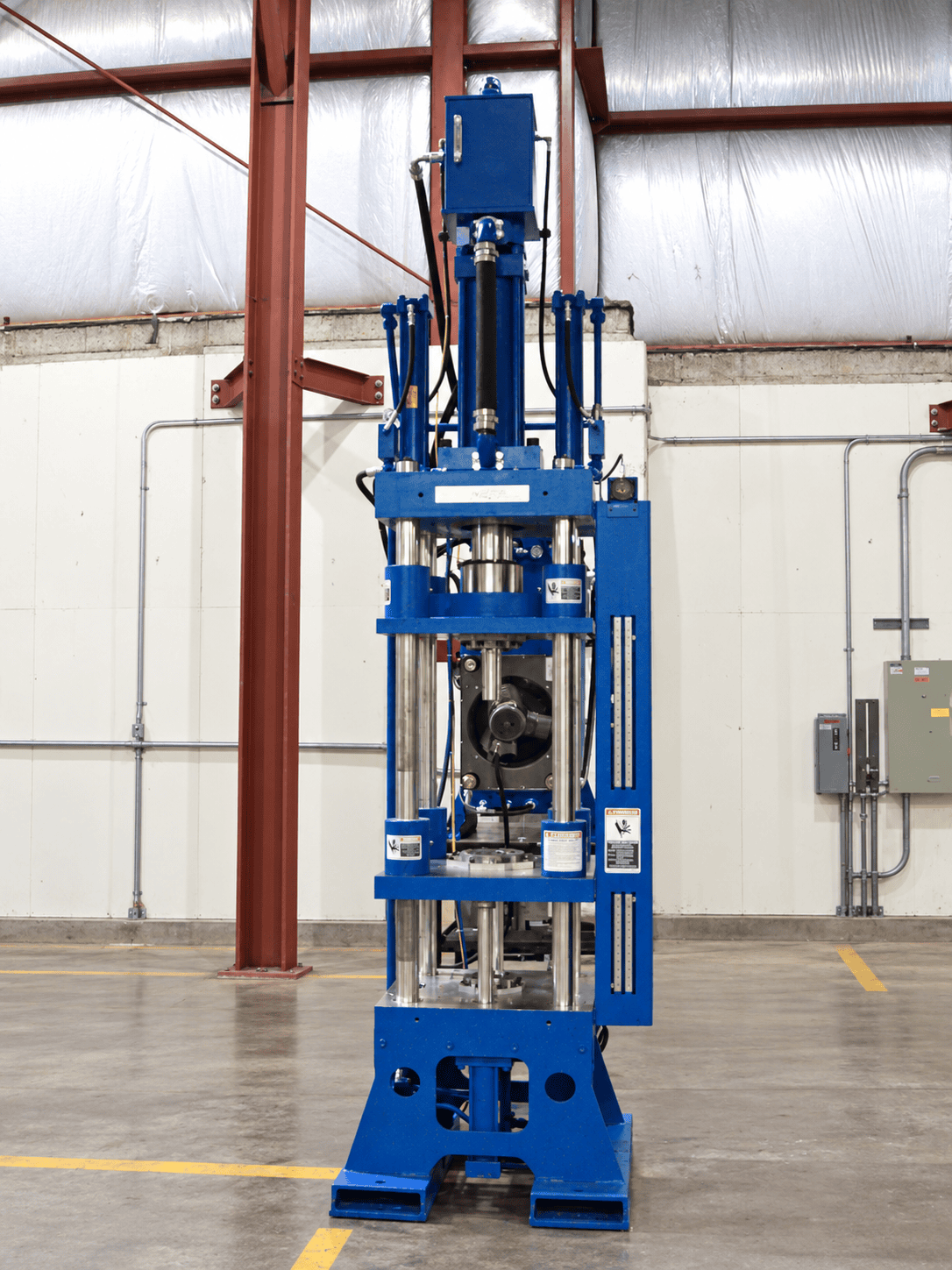
That extra cost may be justified when a press is genuinely intended for a Class I environment. It is not a criticism of Class I equipment. The issue is applying that design when it is not necessary.
A specification should be conservative about safety, but it should also be disciplined. If an organization defines a combustible-dust application as a gas- or vapor-driven Class I application without supporting process information, it may pay more for a design that does not improve the safety outcome.
The better question is not, “What is the highest classification we can specify?” It is, “What hazard does this press actually need to address?”
The difference becomes clearer when looking at electric motors.
It is easy to assume that a Class I-rated motor is automatically suitable anywhere an explosion-proof motor is needed. That is not always true. A Class I-only motor may not be appropriate for a Class II combustible-dust application because it may not be sealed for dust intrusion.
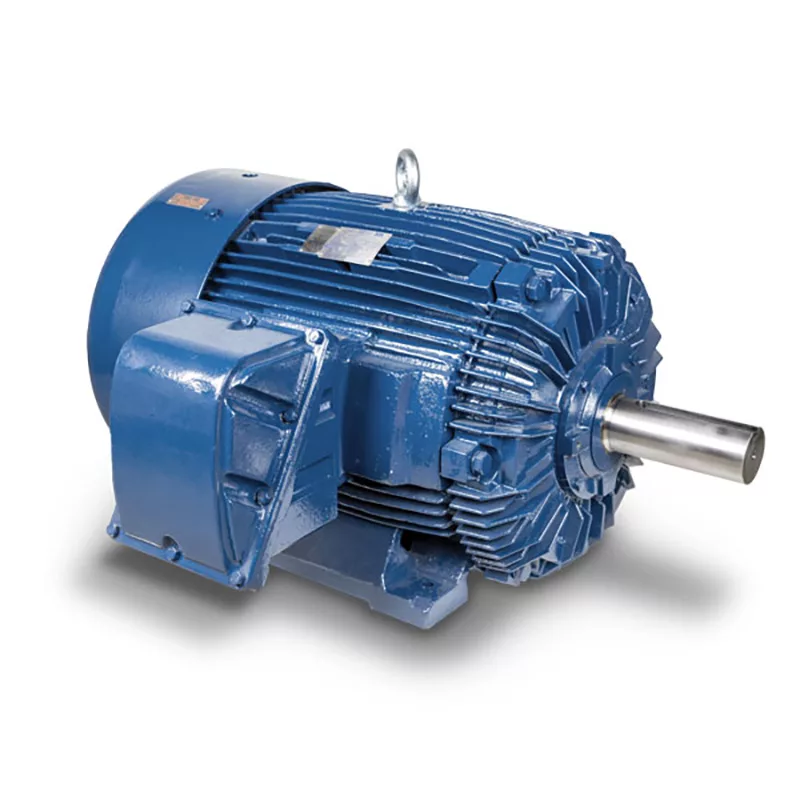
Dust can accumulate and interfere with a motor’s cooling or contaminate bearing areas. Over time, that can contribute to overheating, which is exactly the kind of condition that needs to be considered in a combustible-dust environment.
This is one of the reasons Class I is not inherently safer for a dust application. A component can be rated for an environment involving flammable gas or vapor, yet still be the wrong component for a process where the actual concern is powder and dust. The equipment marking and construction need to match the documented application.
That does not mean every powder compaction press uses the same motor or the same protective design. The material characteristics, process, equipment location, access, and operating conditions all matter. The point is that “explosion-proof” cannot be treated as a single, interchangeable equipment feature.
The effects of an over-specified Class I design show up long after purchase order approval. Maintenance is one of the biggest examples.
Class I equipment often involves substantial bolted enclosures designed to contain or isolate ignition risks associated with gas and vapor applications. Opening a large enclosure can mean removing many fasteners before a technician can inspect, diagnose, or replace a component.
Wiring can add another layer of work. Depending on the equipment and installation method, hazardous-location wiring may require sealed conduit fittings, potted connections, or both. Replacing a cable or wire can involve removing old sealant, pulling new conductors, reinstalling the connection, and restoring the seal using the required method.
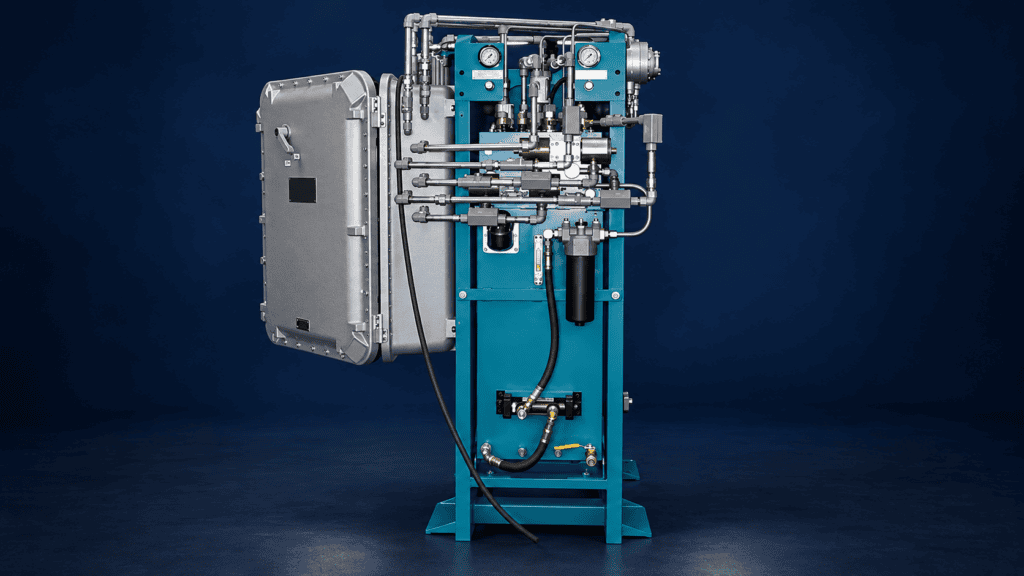
None of that makes Class I equipment wrong. It is simply part of the design and maintenance commitment that comes with that classification. If the application truly requires it, those steps are appropriate. If the actual concern is combustible dust and the press should have been designed as Class II equipment, the organization may be taking on added maintenance time and cost without improving the relevant protection.
For operations leaders, this is a practical issue. A press that is difficult to access is more time-consuming to service. Longer troubleshooting and repair work can increase downtime. On a custom or one-of-a-kind press, that downtime can affect the entire production schedule.
The decision becomes even more important when the end user requires third-party inspection or certification.
Many companies require evaluation by a Nationally Recognized Testing Laboratory, or NRTL, as part of their internal risk-management, insurance, and liability requirements. Under OSHA’s NRTL program, an NRTL certification mark indicates the laboratory tested and certified a product to the applicable product-safety standards.
UL is often the NRTL involved, but it is not the only option. Depending on the press and project requirements, equipment may be evaluated at the factory, in the field, or through a combination of component documentation and complete-system review. UL also provides field evaluations for new, unlabeled, or modified equipment, including equipment intended for hazardous locations.
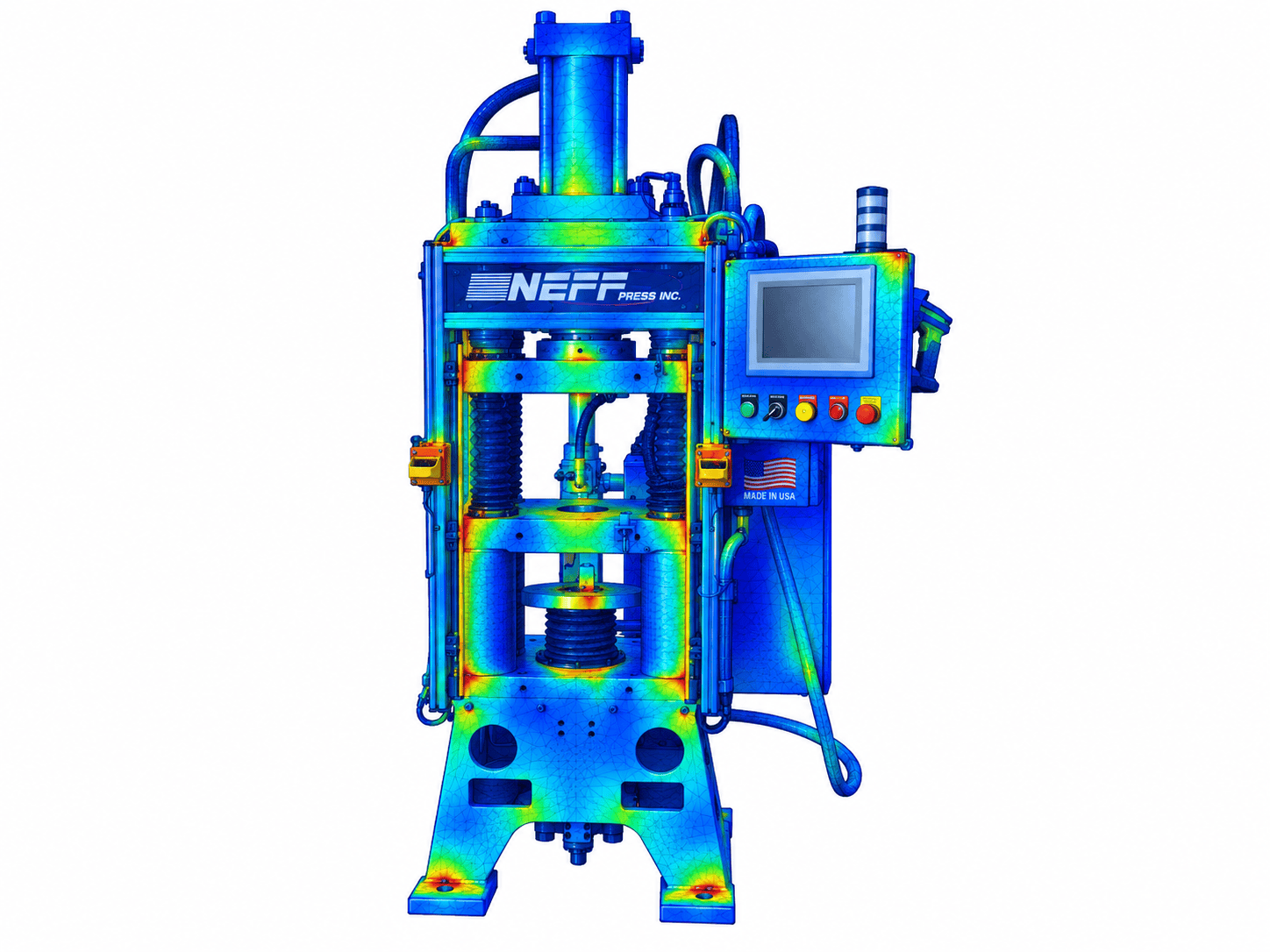
For certain Neff projects, a press may also be sent to a specialized facility for blast testing, with video documentation to demonstrate how the equipment withstands and performs in the required test conditions. That testing is separate from simply selecting a rated motor or enclosure. It reflects the fact that a hazardous-location press must be evaluated as a system, not as a collection of parts.
This is where the original RFQ language matters. An inspector cannot simply approve an unmarked or mismatched component based on judgment alone. The component markings, system design, and documented application need to align.
The scrutiny around these decisions is real. The fatal October 2025 explosions at Accurate Energetic Systems in McEwen, Tennessee brought renewed attention to process safety in the explosives industry. The U.S. Chemical Safety and Hazard Investigation Board’s investigation was ongoing at the time of its 2026 update, so it would be inappropriate to draw conclusions about the cause from that event. Still, the incident is a reminder of why manufacturers, insurers, and plant leaders take equipment safety and independent review seriously.
A safer, more cost-effective press specification begins before the RFQ is issued.
It begins with a clear understanding of what material is being pressed, whether the environment involves gas or vapor versus combustible dust, where the potential hazard exists, and which parts of the machine are exposed to it. That evaluation should account for the press itself, along with controls, motors, wiring, enclosures, operator access points, material handling, maintenance work, tooling changes, and automation.
For powder compaction applications, whether the material is related to munitions, ball powder, metal powder, or another energetic process, Class II may be the correct basis for the equipment design. Class I may still be appropriate when the documented process, facility requirements, or future operating environment call for it.
The distinction is not about finding the least expensive path. It is about selecting the right safety solution.
A useful mental check is this: if the equipment is being called “Class I explosion-proof” simply because that sounds like the safest option, pause before finalizing the RFQ. Ask whether the press is being designed for a gas or vapor hazard, or for a combustible-dust hazard.
Those are not interchangeable risks. The controls, motors, wiring, enclosure design, maintenance requirements, and third-party review process should all follow the actual conditions of the application.
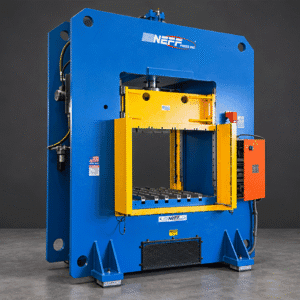
A well-specified explosion-proof hydraulic press is not defined by how much steel surrounds the controls or how many special components are added to the bill of materials.
It is defined by whether the full press system has been engineered for the real process risk.
For a Class I application, that may mean accepting the added cost, enclosures, wiring methods, and maintenance procedures that come with the requirement. For a combustible-dust powder compaction application, a Class II-oriented design may be the safer and more practical choice because it addresses the hazard the process actually creates.
Class I is not always better. It is better only when Class I is what the application requires.
Before issuing an RFQ for an explosion-proof press specification, talk with the Neff Press team about the material, process, press configuration, and safety requirements involved. A short technical discussion at the beginning of the project can help ensure the equipment is designed around the hazard you actually have, not the one a previous specification assumed.